Quer a receita para uma navegação mais gostosa? Ative os cookies!

Impact measured in results

Sustainability in the food sector.

BRL 6.5 bi
in revenue
474
young apprentices hired
BRL 800 mi
generated in taxes and social charges
59,9 t
less plastic consumed
551
products in the portfolio
831
hired immigrants
24%
reduction in waste sent to landfills
13
export authorizations received
BRL 19,8 mi
invested in quality and safety
48.678
active customers
83,9 kWh
self-generated electricity
Animal
welfare certification in every unit
191,68 t
less CO² by replacing gasoline with ethanol
22 mi
invested in occupational safety and health
20,5 t
less cardboard consumed

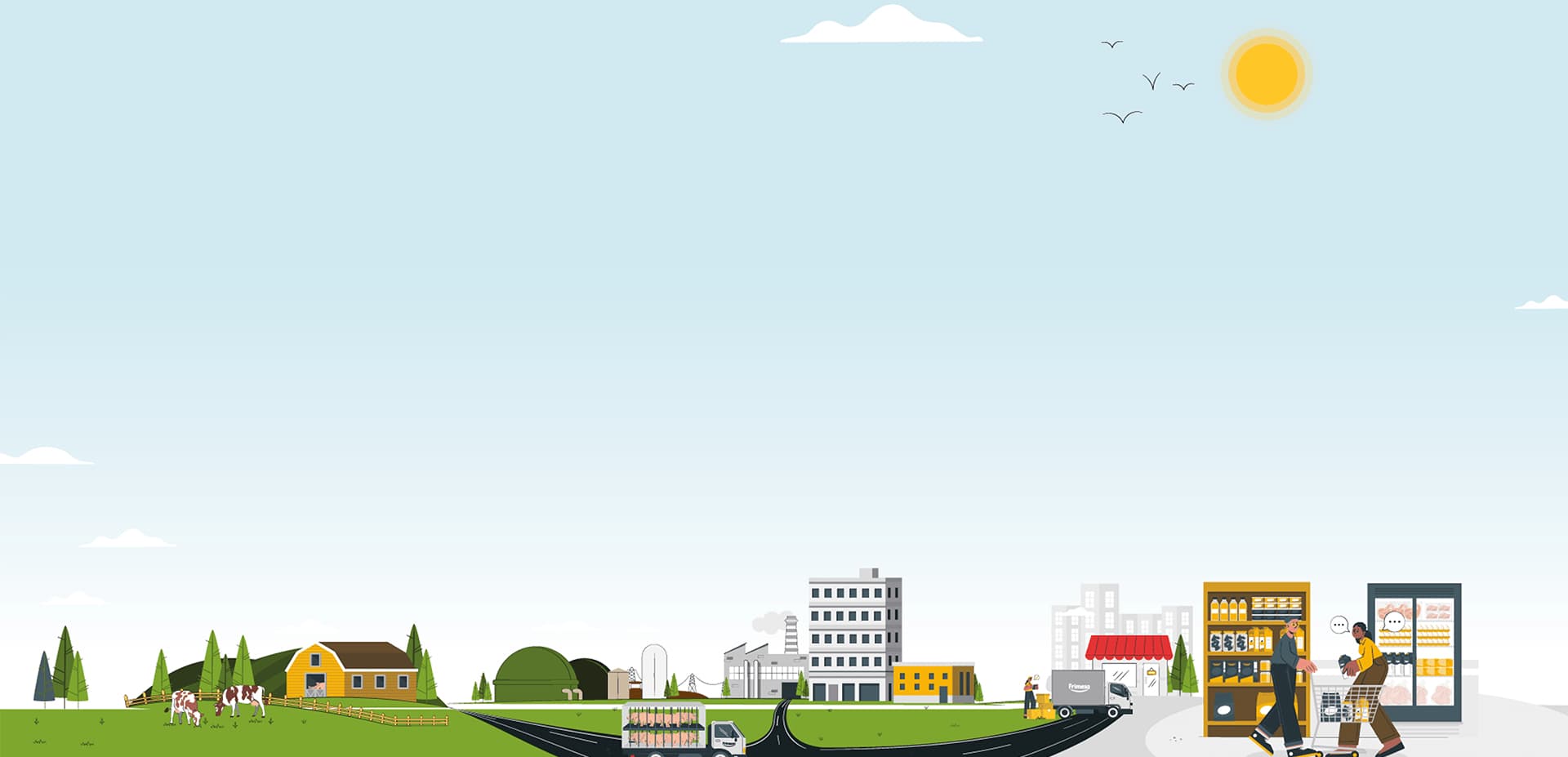
From field to table, every stage of the process matters

Value chain of sustainable product cooperatives that form Frimesa.

01
phase 01
Pig supply

Pigs are raised in production units linked to affiliated cooperatives.
All production is conducted with a focus on animal welfare, health, traceability, and sustainable management practices.

  • 3.265.566 pigs received/year
02
phase 01
Milk supply

On dairy farms, animal management follows Good Agricultural Practices, ensuring the quality, safety and controlled origin of the milk.

  • 245.078.775 liters of milk received/year
03
phase 01
Producers

Producers receive continuous training and comprehensive technical support, covering everything from raw material management to productivity and sustainability improvements.

  • 1.979 milk producers
  • 1.013 pork producers
04
phase 01
Farms

Rural properties follow the Certified Swine and Good Agricultural Practices (GAP) guidelines, particularly in facility adaptation, pest control, equipment maintenance, and animal welfare.

  • 72% of farms are certified under Certified Swine
  • Over 90% of milk producers are classified as Level A or B under Good Agricultural Practices
05
phase 01
Transport trucks

Pig transport trucks follow strict standardization guidelines to ensure the quality, welfare, and comfort of the animals. Milk is collected raw, cooled, and transported in refrigerated trucks, preserving its quality until it reaches the processing plants.

  • 51 vehicles for meat
  • 60 vehicles for milk
06
phase 02
Industrialization

The six industrial plants receive the raw materials and follow strict standards of quality, food safety and production efficiency.

  • Slaughter capacity 15,900 pigs/day
  • Process 1 million liters of milk/day
  • 551 products
  • 12.504 employees
07
phase 02
Storage

With one of the largest cold chain structures in South America, Frimesa ensures that products maintain their quality at every stage, all the way to the end consumer.
  • 15 distribution centers
  • 14 crossdocking units
  • 41,000 storage positions
08
phase 03
Ground transport

Frimesa products are mainly distributed by road transport, using refrigerated trucks equipped with trackers, temperature sensors, and door-opening monitoring.

  • 410 transport companies
  • 1,656 vehicles
  • 22,000 tons of products/day
09
phase 03
Maritime transport

Most products destined for export are shipped by sea. Frimesa holds the Authorized Economic Operator (AEO) Certification, demonstrating a high level of compliance and security in foreign trade.
  • Exports to 4 continents
  • 29 countries served
  • 2,959 sea containers
  • 101,064,570 tons exported
10
phase 03
Delivery to the customer

Frimesa products reach a variety of channels, including supermarkets, wholesalers, foodservice, distributors, and the food industry.
  • 81,46% domestic market
  • 18,54% foreign market
IN THE HANDS OF CONSUMER

With a broad portfolio of pork and dairy products, our products are renowned for their quality and are present on all consumption occasions, from breakfast to dinner.

Public goals, transparent progress

Environmental responsibility and commitments until 2040.

Deadline
Goal
Progress
2024
Sustainability committee established
2025
100% animal welfare
2025
Biosecurity on 80% of farms
2025
Achieve 10% water reuse
2025
Target a 25% reduction in accident severity
2025
Implement socio-environmental risk management and ESG compliance
2030
38% reverse packaging logistics
2030
Reduce the number of workplace accidents by 50%
2030
100% traceability in the supply chain
2030
Audit 100% of critical suppliers
2030
30% of women and other minorities in management positions
2030
Reduce water consumption in industries by 10%
2030
95.7% of renewable energy sources in industries
2040
50% of packaging is recyclable, reusable or biodegradable
2040
Becoming carbon neutral in scope 1

Downloadable reports

Below, you can download the Frimesa 2024 Sustainability Report and several other reports, highlighting our commitment
to environmental responsibility and best sustainability practices in the food sector.

Request for financial statements

Frimesa is a Central Cooperative that operates on solid principles of cooperation, ethics, and transparency.
Financial institutions, customers, suppliers, and other partners who wish to access the 2024
Annual Report and Financial Statements can contact us at: assessoriacomunica@frimesa.com.br.